
Have you ever caught yourself zoning out when someone’s talking about something you just don’t care about? Turns out, you’re already familiar with customer segmentation in your personal life. The same principle applies to marketing – if it’s not interesting or relevant, people tune out. Think of it like sharing a post on your social media; not everyone will find it interesting, and that’s okay.
So, how do you avoid being irrelevant? The answer is simple: know your audience. By understanding who they are, you can use segmentation to tailor your email marketing efforts. Without segmentation, you’re just mass mailing – and let’s be honest, that’s basically spamming your customers.
How to Find Your Target Audience
To truly understand your audience, segmentation is key. This means breaking down your audience into smaller, more specific groups based on factors like demographics, behaviours, and preferences. There are plenty of ways to find your target audience, you might already have tools in place to start gathering and analysing the data for the insights, this might include:
- Social media analytics
- Website analytics
- Your CRM platform
If you use a CRM platform, you’re already sitting on a goldmine of customer data. Direct-to-consumer brands (D2C) often have an advantage here because they own all their customer data and don’t need to rely on third parties. Even without a CRM, you can tap into data from your e-commerce platform – think wish lists, abandoned carts and loyalty programmes.
How do I Segment my Target Audience?
We recommend creating a customer persona fictional character embodying your ideal customer. According to Notify Visitors, 90% of companies that use customer personas gain a deeper understanding of their audience, while 82% see an enhanced value proposition as a result.
Fill in the details like their age, job, favourite hobbies and personality. Don’t forget to add what they want such as goals, pain points and more. Once you have your personas, you can use this information to craft targeted marketing campaigns. Here are some examples below to get you started.
Examples of Customer Segmentation
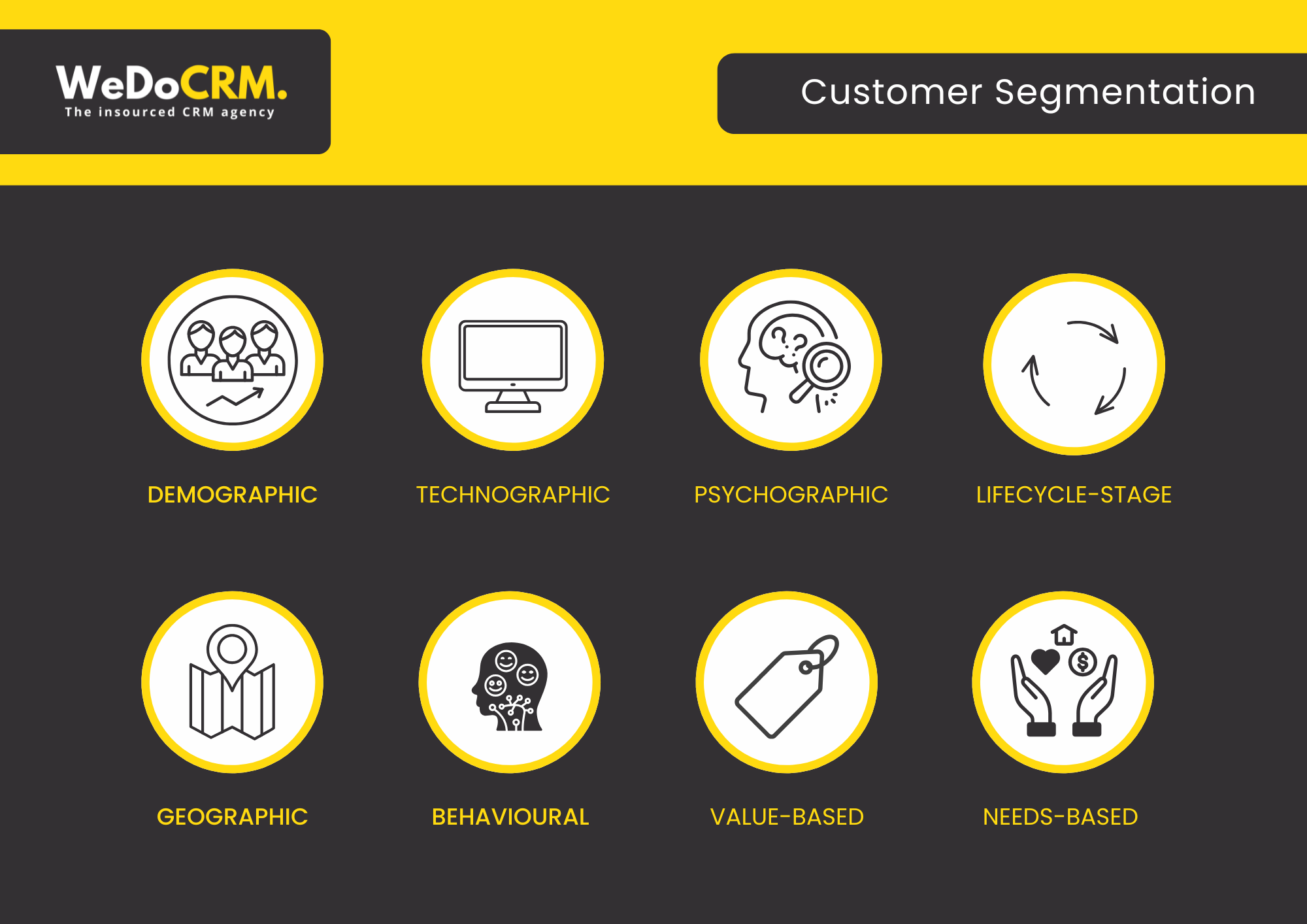
1. Geographic Segmentation
What it is: Dividing customers based on location – country, region, city, climate, or even area they live in.
Why it matters: Location often affects buying behaviour, product preference, shipping needs, or marketing messaging.
Example: A winter jacket brand targeting cold regions differently than tropical areas.
2. Behavioural Segmentation
What it is: Grouping customers by how they interact with your brand – purchases, website activity, email engagement, or product usage.
Why it matters: Helps you tailor marketing based on actual behaviour, not just assumptions.
Example: Customers who abandon carts can get a recovery email; loyal repeat buyers get VIP offers.
3. Value-Based Segmentation
What it is: Segmenting based on a customer’s value to your business – revenue potential, lifetime value, or profitability.
Why it matters: Helps prioritise resources and marketing efforts on high-value customers.
Example: Giving top-spending customers early access to new products or premium support.
4. Needs-Based Segmentation
What it is: Grouping customers by the problems they need solved or the benefits they seek.
Why it matters: Lets you target messaging and product offers precisely to what motivates them.
Example: Fitness customers wanting weight loss vs. strength training receive different campaigns.
5. Technographic Segmentation
What it is: Segmenting based on the technology your customers use – software, devices, or platforms.
Why it matters: Critical for B2B, SaaS, or tech products to target customers who actually can use your solution.
Example: Marketing a Salesforce add-on only to companies already using Salesforce.
6. Psychographic Segmentation
What it is: Grouping customers by personality, lifestyle, interests, values, or motivations.
Why it matters: Adds emotional targeting – appealing to customers’ identity or aspirations, not just demographics.
Example: Eco-conscious buyers respond to sustainable products messaging.
7. Lifecycle-Stage Segmentation
What it is: Dividing customers based on where they are in the buying journey, new leads, active customers, repeat buyers, or lapsed customers.
Why it matters: Lets you send the right message at the right time to guide them through the funnel.
Example: New leads get onboarding emails, repeat buyers get loyalty offers, inactive customers get re-engagement campaigns.
Segmented Target Audiences and Marketing Strategies
Putting your segmented target audience into a marketing strategy
Once you’ve cracked the code on segmenting your target audience, it’s time to bring your plan to life. How are you going to reach out to those targeted groups? Will it be through email, social media, or personalised landing pages?
Creating a marketing strategy with a segmented audience involves a series of steps which we have outlined below. Here’s how you can begin your marketing strategy with your segmented target audience.
1. Gather and Analyse Your Data
From crafting your customer personas to gathering detailed info through your CRM, web analytics, and surveys, you’re setting the stage for a great strategy. Dive into how your customers interact, from purchasing habits to the content they love. Make sure you have all this in place and you’ll be set for the next step.
2. Develop a Unique Value Proposition for Each Segment
What excites a tech-savvy young professional may not resonate with someone who’s retired. While your messaging should stay true to who you are and your brand’s voice, also remember that each message should be customised for its audience. Imagine your messages as tailored outfits: while the style should reflect your brand’s personality, each piece should fit the unique preferences and needs of the people wearing it. This way, you’ll ensure your communication is both on-brand and spot-on for each segment.
3. Create and Personalise Content
Now it’s time for the exciting bit, get creative! Mix things up with different content types such as blogs, videos, infographics and case studies, which one matches the segment’s interests? Maybe one group likes reading your blogs, while another is all about quick engaging videos. It’s time to create and test to see what works best.
4. Use Different Channels
Different segments interact with brands through different channels. Younger audiences prefer Instagram and TikTok compared to professionals who I would say lean towards Linkedin. So make sure you pick the channels your segments actively use and implement cross-channel strategies. For example – retargeting customers with social ads after they’ve engaged with your email campaign, to create a cohesive experience.
Want to know more about cross-channel strategies and multichannel marketing? Take a further look at our article “Multi-channel marketing: Choosing the right channel, for the right person”.
5. Bring in Automation
Let automation be your new best friend! We love automation, they make life so much easier. Think of it as having a personal assistant who never sleeps and is always ready with a helpful reminder. Set up your marketing tools to handle the heavy lifting, such as behavioural triggers to automatically deliver relevant content like sending out those “Oops, you left something in your cart!” emails or celebrating customer anniversaries with a special note. Plus, automate those little nudges, like offering discounts or demos to those who can’t stop eyeing that one product page.
Curious about how CRM automation can supercharge your segmentation efforts? Check out our article, “Why CRM Automations Are Key to Successful Segmentation” for all the details.
6. Expand, Innovate and Look for NEW Segments
As your business grows, stay on the lookout for new segments to target – whether it’s due to shifting customer habits, fresh product lines, or new market trends. Get inventive with your campaigns: roll out exclusive perks for your loyal customers or offer exclusive deals or early access to new products for loyal customers while using gamification techniques to engage a younger, tech-savvy audience.
How We Can Help With Segmentation and Targeting
Segmentation is the key to unlocking revenue as it means you’re contacting individual customers in the most relevant way, at the right time, and via the right channel.
Interested in learning more? We’ve implemented segmentation strategies and multi-channel marketing for some of the world’s biggest brands and we’re committed to making that expertise and experience available to you and your organisation.
Our skills and experience with CRM leave you free to focus on the parts of your business that matter to you, knowing you’re getting the ROI you need. Get in touch with us today.
Want more insights? Check out:
- Top 6 CRM Trends – What’s shaping the CRM landscape next.
- Top CRM Trends from SugarCRM’s Report – Data-driven priorities for CRM success.
- How CRM is Changing B2B Sales – CRM’s impact on modern sales processes.